HIGGS Diesel
  • Home
  • HIGGS Diesel
    • FALCON FL200 series
    • HAWK V4
  • Technologies
  • History
  • FAQ's
  • Order
    • HIGGS Pricing
    • HIGGS reservation
  • Alliances
    • Tanida Japan
    • ROW (Rest of World)
  • Company Info
    • Contact Us
    • About Us
  • Downloads
  • Videos
  • News and Support
    • News and PR
    • Service Bulletins

HIGGS DIESEL OVERVIEW

HiggsDiesel Engine Overview The FL and E series represent a new generation of stepped piston engines featuring segregated scavenging. Engineered for ultra-lightweight, high-performance aviation applications, they deliver exceptional reliability and low operating costs. Designed for compatibility with Jet fuel and other fuel types, they offer true multi-fuel capability for modern aircraft platforms. The Problem Despite its limited usage—just 0.76 million gallons per day compared to 372 million gallons of pump gasoline and 68 million gallons of jet fuel—AVGAS (aviation gasoline) remains a significant environmental concern. Unlike automotive fuels, AVGAS still contains tetraethyl lead, a toxic additive that disperses into the air through engine exhaust. Even at low concentrations, airborne lead causes severe and cumulative neurotoxic effects, especially in children, including developmental impairment and behavioral disorders. Most general aviation piston engines still require leaded AVGAS due to its unique properties: high knock resistance, volatility, fluidity, and oxidative stability. However, unlike the automotive industry, which transitioned to unleaded fuels decades ago, general aviation remains constrained by legacy engine designs, limited investment, and regulatory inertia. Military standards also increasingly prohibit the use of AVGAS, adding urgency to the search for alternatives. Numerous next-generation engines have been proposed, but most have failed due to excessive complexity, cost, or substandard performance. In contrast, the FL and E series adopt a mechanically simple, highly reliable, and efficient architecture—directly addressing the key barriers that have hindered prior solutions. They offer a clear, viable path forward for both general aviation and unmanned systems. Engine Operating Principle The FL and E Series utilize a compact V4 stepped piston configuration, with paired opposing cylinders arranged in banks. Each pair operates using segregated scavenging, where air is drawn exclusively into a dedicated pumping annulus through ports. As the piston ascends, the compressed charge is transferred through a crossover passage to the opposing working cylinder, enabling loop scavenging. Unlike traditional crankcase-scavenged two-stroke engines, this architecture maintains complete crankcase isolation, combining the scavenging efficiency of a two-stroke with the lubrication and durability advantages of a four-stroke—all while eliminating valves, camshafts, and complex timing mechanisms. Engine Durability & Operational Advantages • Traditional four-stroke wet-sump lubrication, ensuring familiarity and ease of service • No valves, springs, gears, or camshafts, drastically reducing mechanical complexity • Low thermal stress on pistons, improving component life • Low exhaust temperatures and clean combustion, reducing emissions • Compact, low-mass architecture, optimized for aviation platforms • Fewer moving parts, lowering production costs and simplifying maintenance • High reliability, with fewer potential failure points • Extended oil change intervals—oil remains clean due to lack of blow-by • Compatible with Jet fuels (Jet A, Jet A-1, JP-5, JP-8) • Capable of running on automotive gasolines, including 91–95 octane and 100LL • Extremely low infrared (IR) signature, ideal for tactical and UAV applications • Extended loiter times compared to turbine engines Engine Design Philosophy The FL and E Series successfully combine the core benefits of two- and four-stroke architectures, while eliminating the disadvantages of each. By fully separating the charging and lubrication processes, the engine avoids the primary failure mode of traditional two-stroke designs: crankcase oil contamination by the fuel-air mixture. Compression and oil-control rings on the pumping piston ensure total crankcase isolation, allowing lubrication to occur independently of the combustion cycle. This results in: • Superior lubrication performance • Reduced oil degradation • Longer engine life • Cleaner emissions The combustion process remains completely sealed above the piston, allowing efficient, high-performance operation without the thermal or mechanical compromises of legacy engine types. Crankcase Isolation & Performance Benefits Crankcase isolation enables the use of a full-pressure lubrication system, eliminating the need for oil-fuel premixing common in conventional two-stroke engines. This greatly simplifies fuel logistics, particularly for military or remote operations where supply consistency is critical. The stepped piston design inherently provides effective piston cooling, allowing much leaner fuel-air mixtures without risking overheating or seizure, as often seen in traditional crankcase-scavenged engines. The result is enhanced thermal margin, improved efficiency, and superior durability. Smooth Power Delivery Retaining one of the key advantages of two-stroke engines, the FL and E Series deliver a power stroke in every cylinder on every revolution, ensuring extremely smooth and continuous torque output. The V4 and opposed-4 configurations are optimized for balance and compactness, producing evenly spaced firing intervals. The result is exceptional smoothness, comparable to an eight-cylinder four-stroke engine, but in a much smaller and lighter package—ideal for UAVs and manned aircraft alike. Stratified Charging & Power Density The SPSS port layout creates a form of stratified charging, boosting fuel efficiency under cruise conditions. This simple but effective strategy allows the FL and E Series to match or exceed four-stroke fuel economy, despite their reduced complexity. Current variants have achieved specific power outputs of 75 kW/L, placing them firmly in the range of high-performance four-stroke engines. With further optimization of combustion and transfer technologies, even higher outputs are expected. While overall size and weight sit between two- and four-stroke architectures, the simplified design and reduced part count give the FL and E Series a performance and mass profile closer to a two-stroke, but with the emissions, fuel flexibility, and reliability of a modern four-stroke. Engine Configurations & Simulation-Driven Development Development of the FL and E Series was guided by over a century of engineering experience, supported by modern CAD and simulation tools to optimize performance, packaging, and manufacturability. Key simulation work included: • Cylinder porting optimization, using pressure-time modeling • Airbox and inlet tract analysis, maximizing charge/trap efficiency • Transfer and exhaust port flow modeling, ensuring clean scavenging • Valve-equivalent area studies, applicable to port-driven designs • Exhaust resonance and pressure wave tuning • Dynamic loading and bearing life simulation • FEA (Finite Element Analysis) of key stress-bearing components This simulation-led, iterative approach has enabled rapid refinement across multiple configurations—including V4, inline-4/6/8, opposed-4, and V12 layouts—ensuring optimal balance of mass, power output, and structural durability before hardware is built. Maintenance & Time Between Overhaul (TBO) The FL and E Series engines drastically reduce maintenance requirements compared to traditional piston engines. Their clean crankcase environment, stable oil conditions, and lack of blow-by eliminate many causes of degradation and failure. • Oil is not exposed to high-temperature zones near combustion, unlike in four-stroke engines • Tetraethyl lead contamination—a major source of corrosion—is fully avoided • Oil samples after hundreds of hours show minimal additive breakdown • Top-up only lubrication may suffice for many operational profiles These attributes result in: • Extended Time Between Overhaul (TBO): approx. 3,500 hours • Reduced lifecycle costs • Minimal lubrication-related service • High uptime, especially for UAVs and fleet operators Conclusions The FL and E Series engine platform has achieved—and in many cases exceeded—its design goals: low system mass, exceptional reliability, low vibration, fuel flexibility, and high specific power. High-power operation on Jet-A and Jet-A1 fuels has been consistently demonstrated, with performance within 4% of gasoline equivalents. This confirms its suitability for military, commercial, and unmanned platforms, especially those requiring multi-fuel capability. With continued development in combustion optimization and transfer control, further gains in both efficiency and power density are anticipated—positioning the FL and E Series as a practical, scalable, and disruptive solution for the future of aviation propulsion.

Extended Mission Duration

It is necessary to emphasize the importance of the very high volumetric efficiency of the traditional piston controlled parts employed by the standard two cycle engine. Until now, no existing type of inlet valve could produce the essential requirements of presenting the maximum inlet area to the air in the minimum time. The new design outlined below, significantly increases both the utility and the efficiency of the two cycle engine, which may now be more efficiently scavenged. The layout adopted concentrates the scavenge flow at the wall of the cylinder opposite the exhaust part. This compares with more evenly dispersed scavange flows common in conventional engines. Scavenge flow within the cylinder provides, in effect, a form of stratified charging and explains improvements in fuel economy obtained with such a simple layout. This enables combined cycle engines to compete with four-cycle engines in terms of fuel economy, especially under cruise conditions.
R&D
We use the following tools: 3D Catia modeling; Solidworks; ProE; thermal and mechanical finite element analysis; computational fluid dynamics and fatigue post processing software.
Design
We have developed proprietary port software, and have vast experience in advanced materials and coatings technology.
Manufacturing
We have a number of novel elements within our manufacturing and casting technologies.

Combined Cycle Spark Ignited

The Higgs Diesel is not really a diesel in the traditional sense, it is a spark ignited "Combined Cycle Technology" engine, burning JET A, diesel and gaseous fuels such as hydrogen. It is in fact, a true multi fuel engine. 'Combined Cycle Technology' (CCT). This refers to the combined forced scavenge of the engine via the pump attached to the bottom of the piston and pre-charging of the cylinder. Removing the need for a separate supercharger or mechanical pump. This all takes place in a single action, hence "combined cycle". As we are a spark ignited engine and not a diesel, the compression is considerably lower, in the range of 6.5~8.5:1 (this being trapped compression ratio not full compression as measured on a four stroke engine). Unlike a 'normal' two stroke engine, we do not premix or use any oil with the fuel for lubrication. The lubrication circuit is separate and is almost identical to most four cycle engine types. The pumping piston, attached to the bottom of the working piston only draws in air for combustion, this air is transferred to the working piston and fuel is directly injected into the cylinder avoiding any short circuit of fuel out the exhaust, which is a common trait of many two stroke engines and allows for a very clean burn engine. As we are not a "diesel" engine, as in the form of a traditional Compression Ignition type (C.I), this allows us to design components that are considerably smaller and substantially lighter than a "traditional" diesel engine. The reduced weight of these components, combined with a reduction of part count, we have no valves, cams or supercharger etc, allows for a small and lightweight footprint than would otherwise not be viable with any other solution.

Video can’t be displayed

This video is not available.

Technology

The crankcase, freed from any gas exchange functions, is well lubricated; the working processes being sealed above the piston. Isolation of the crankcase also permits a full pressure lubrication system to be used, as in four-cycle engines. Inherent piston cooling characteristics of the combined cycle piston design offer a major durability advantages over conventional two-cycle engines, allowing much leaner fuel delivery than can be sustained with traditional crankcase scavenging, where usually piston overheating and consequent seizure are common. This technology operates without complex mechanical components such as cams, valves mechanisms, end the other various precision components necessary to operate them. The absence of these mechanical components eliminates a large number of moving parts, thereby considerably reducing the costs and maintenance requirements, whilst significantly increasing reliability and retaining the simplicity of the two cycle engine. With this novel cycle engine technology, combined with the enormous benefits together with their appealing simplicity, a new generation of lightweight high performance power plants can be achieved, which until now would have been almost impossible. The use of combined cycle pistons, for charge transfer and combustion, allows the key advantages of two and four-cycle engines to be combined, with the elimination of disadvantages inherent in each of these engine types.
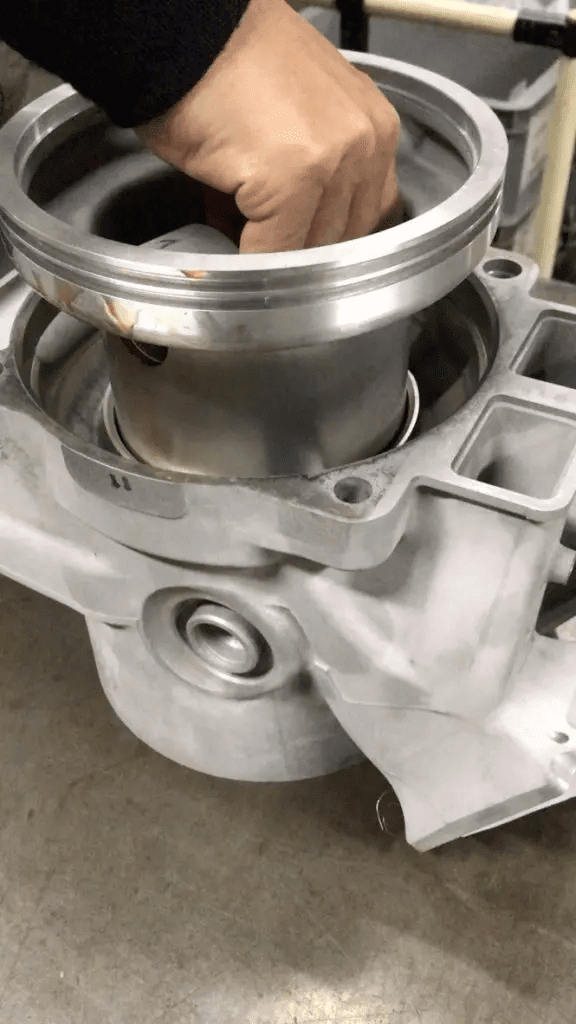
Stepped piston

Gearbox & Accessory Drive

The engine is designed from the outset to run with a reduction gearbox. Generally speaking, the design of such a unit for aviation is complex due to the highly stressed loading and the necessity to remove vibration from the crank, coupled with undesirable instantaneous torque fluctuations, these units tend to be massive, complex, and require high maintanence. The FL 200/265 series with their low torque fluctations inherent with a two stroke, allow for a different approach to gear sizing, materials, and integration. The gearbox low axial load is achieved by using a bevel planetary reduction unit supported by it's own bearings and attached to the crank via a spline (no bending transmitted to the pinion). This method allows the torque loading to be shared with a corresponding increase in service life. The gear-case is an integral unit containing both rolling elements for load and thrust.

Comparitive Data Tables:
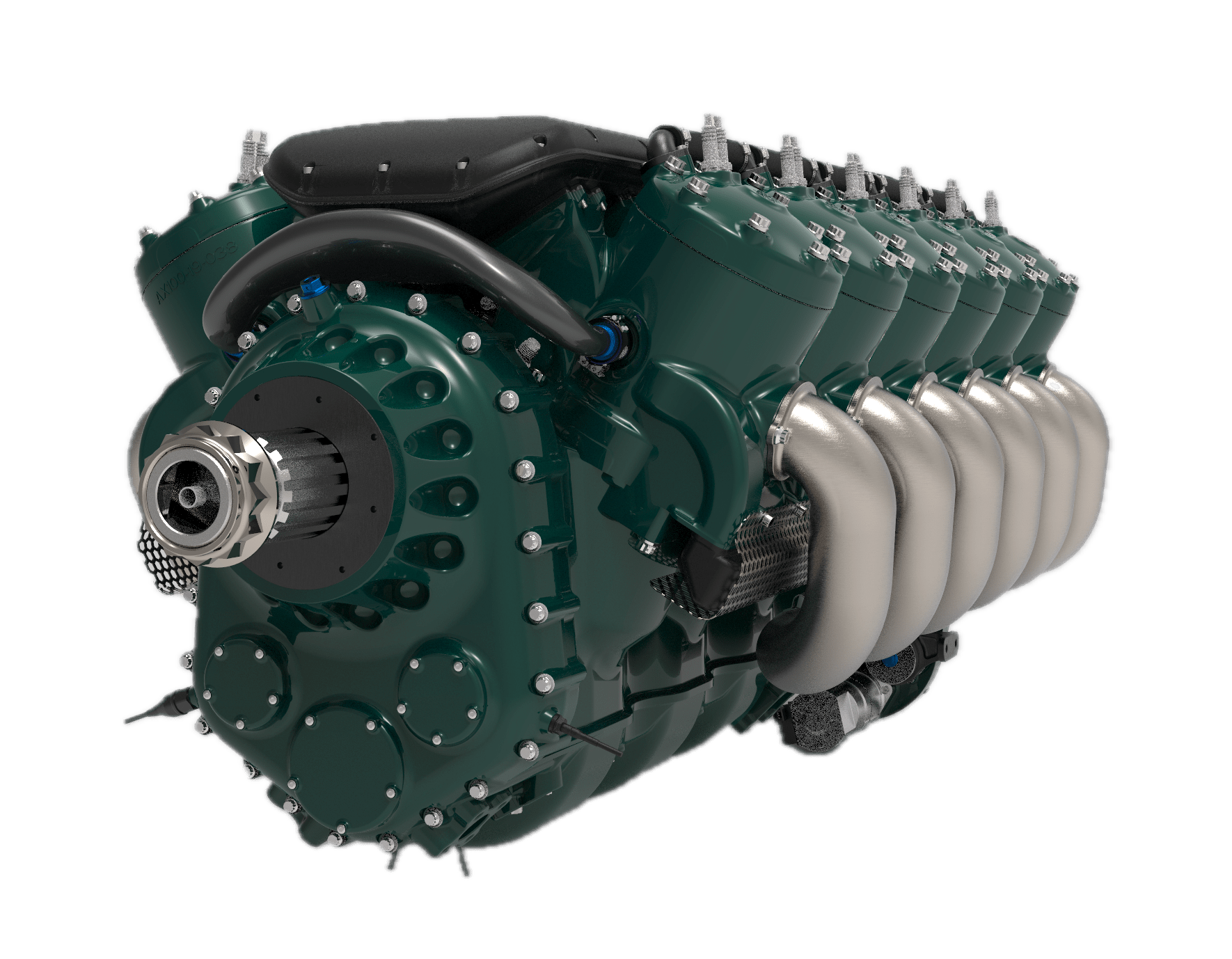
CONDOR™ E1000J/G-T

1,638 hp | $REQUEST
  • Horsepower: 1,638 hp~2000hp
  • Weight: 327 kg
  • Fuel Consumption: BSFC, 0.398lb/hp-h (231g/kW-h)
  • Lower Operating Cost
  • Lower Acquisition Cost
  • 60% MORE Mission Range

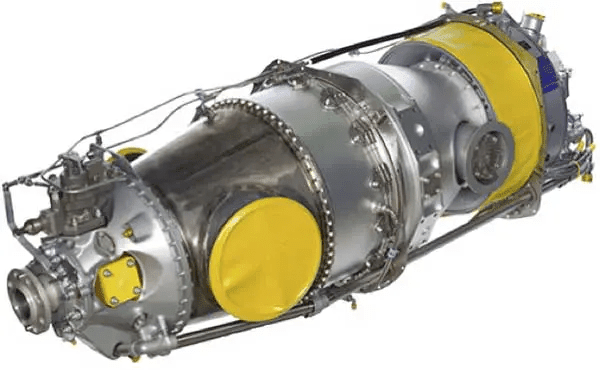
Pratt & Whitney PT6

1,585 hp | $680,000*
  • Horsepower: 1,585 hp
  • Weight: 280 kg
  • Fuel Consumption: BSFC, 0.507 lb/hp-h (308g/kW-h)
  • Higher Operating Cost
  • Higher Acquisition Cost
  • 60% LESS Mission Range Increase
*Estimated and includes install kit

Fuel Type & Consumption

This platform of engines has been designed from the ground up to be a true multi-fuel unit.
Designed to run on industry standard Jet fuel (Diesel (EN590), Jet A, Jet A-1, JP-5, DEF STAN 91-86, JP-8, DEF STAN 91-91, JP-8+100, Chinese Jet Fuel No 3). Will also run and perform on all gasolines where necessary, 80, 87, 91, 95, including 100LL, along with all bioderivatives. Other types of fuel include hydrogen gas, BSFCm 0.398 lb/hp-h (231g/kW-h). Pratt & Whitney PT-6 Turboprop by comparison is 0.507 lb/hp-h (308 g/kW-h) (on approach and idle 0.825 lb/hp-h (502 g/kW-h)).

Performance Continued

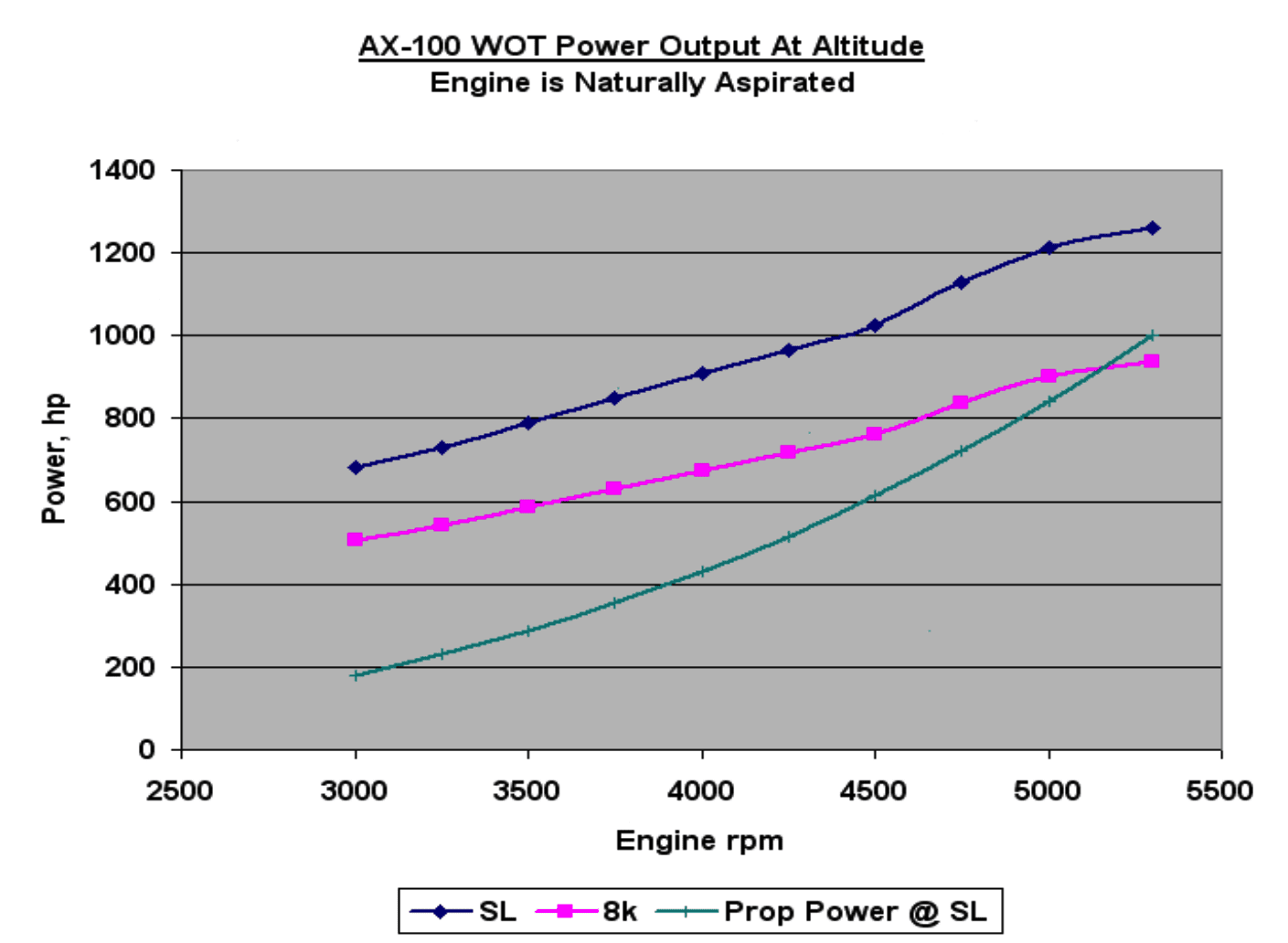
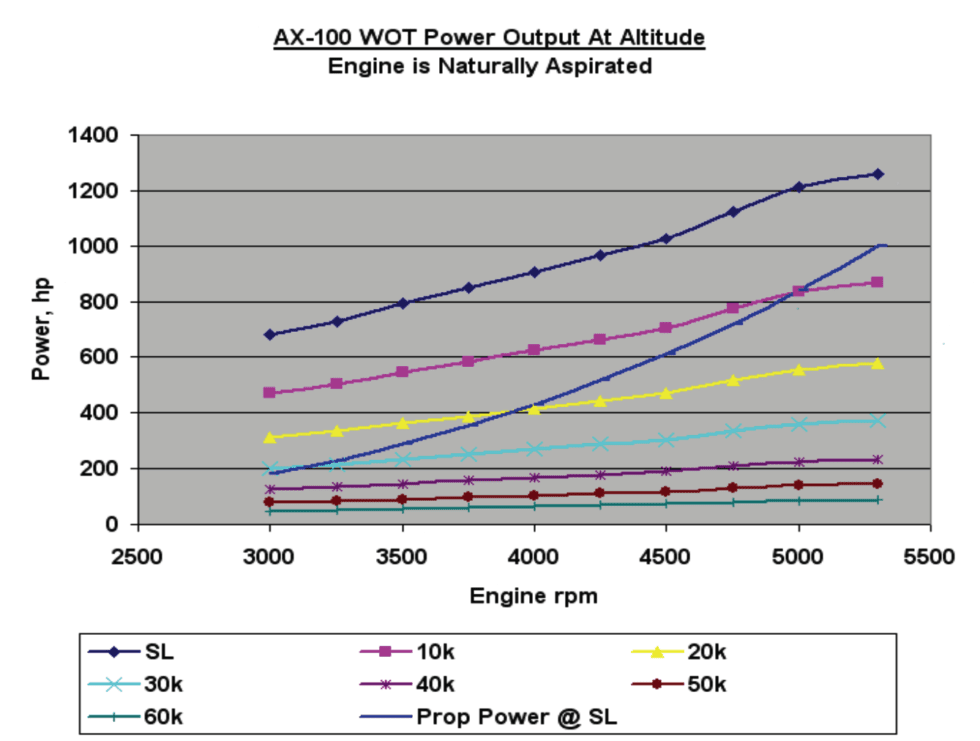
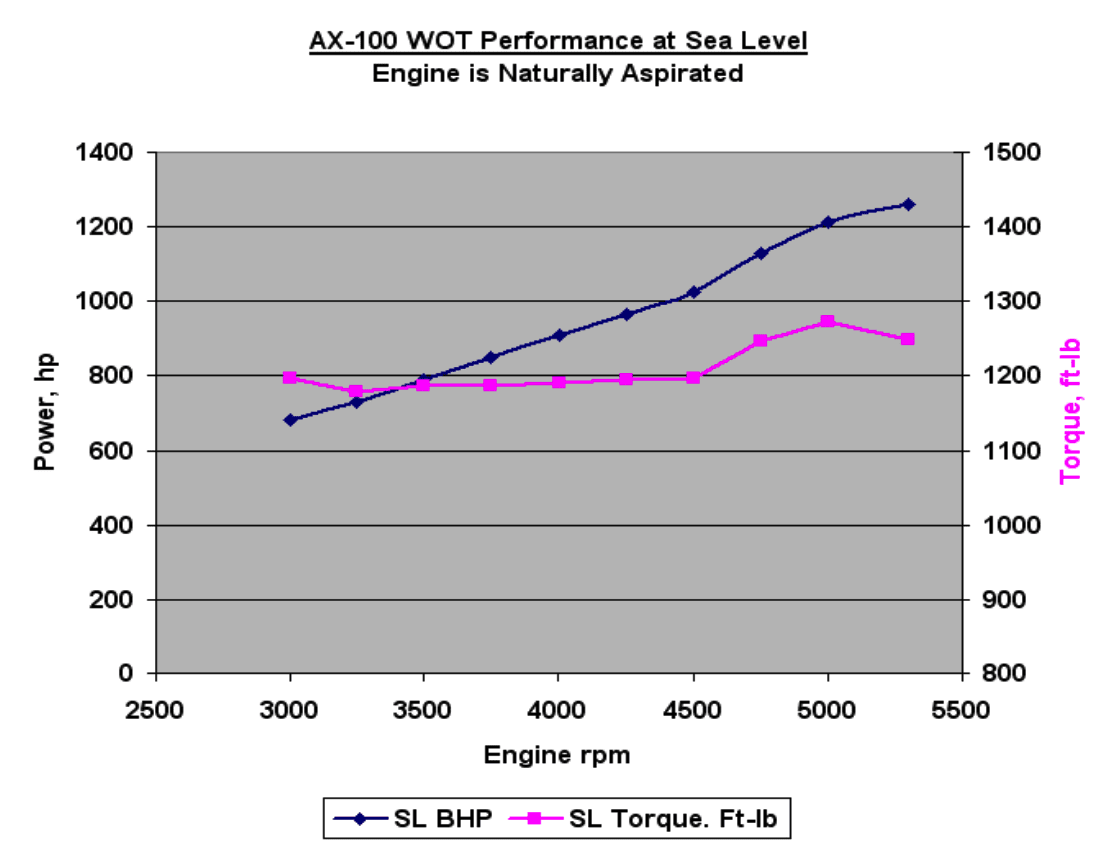
Performance predictions of the naturally aspirated AX-100 CONDOR V12 (The largest version we have designed) engine were conducted to examine power output at altitudes ranging from sea level to 60,000 feet. This study reflects the WOT (wide open throttle) performance at the altitudes considered. A propellor power absorption curve is shown for reference. The propellor absorbs 1,000 hp @ 5,300 rpm at sea level. As altitude is increased, fuel injection rate is reduced to maintain a best power air/fuel ratio at all rpms. The power predictions reflect that of an un-tuned engine as inlet and exhaust system ducting optimization has not been defined at this time. Maximum rated power at sea level is 1,259 bhp @ 5,300 rpm with corresponding bmep of 94 psi (6.5 bar) Approximately 930 bhp @ 5,150 rpm is available at 8k feet, this was the maximum altitude requirements for the NA engine at Reno Air Races.
WELCOME TO THE FUTURE OF AERO ENGINES
Our highly anticipated new range of engines, The baby FL200/FL265 “Falcon” series. and it's big brother the E-330 J/G "HAWK" series. The latest innovation in power and efficiency! After a brief delay to ensure every detail met our rigorous standards, we're thrilled to announce its official launch. This cutting-edge engine promises exceptional performance, enhanced fuel efficiency, and unmatched reliability. We appreciate your patience and are confident that this new engine will exceed your expectations, setting a new benchmark in the industry. We are now taking formal orders, so stay tuned for more updates and be among the first to experience the future of engine technology
Main Office:
AC Company Kanazawa Japan 920-0209

We use cookies to enable essential functionality on our website, and analyze website traffic. By clicking Accept you consent to our use of cookies. Read about how we use cookies.

Your Cookie Settings

We use cookies to enable essential functionality on our website, and analyze website traffic. Read about how we use cookies.

Cookie Categories
Essential

These cookies are strictly necessary to provide you with services available through our websites. You cannot refuse these cookies without impacting how our websites function. You can block or delete them by changing your browser settings, as described under the heading "Managing cookies" in the Privacy and Cookies Policy.

Analytics

These cookies collect information that is used in aggregate form to help us understand how our websites are being used or how effective our marketing campaigns are.